
Health insurance cost in Pakistan in 2026 runs from about Rs 15,000 a year for a basic individual plan to Rs 100,000 or more for a family of four with Rs 20 lakh of cover. A healthy 25-year-old can get Rs 5 lakh of hospital cover for roughly Rs 12,000–15,000 a year — less than Rs 1,250 a month. A family of four wanting Rs 10 lakh of cover should budget Rs 45,000–65,000 a year. And if your family qualifies for the government's Sehat Sahulat programme, the cover itself costs nothing at all.
Those are the headline numbers. The rest of this guide explains what sits behind them: what a hospital actually charges when you pay cash, what each level of cover buys, where the free government card beats a paid policy (and where it does not), and three worked budgets you can copy for your own family.
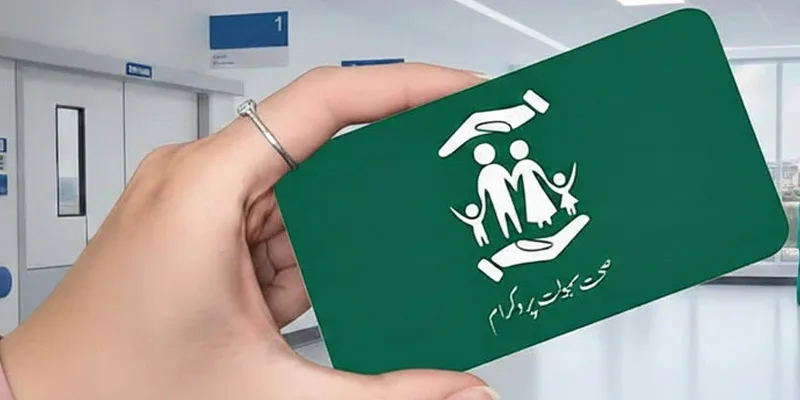
Health Insurance Cost in Pakistan 2026: The Short Answer
Start with the table, not the sales pitch. These are the 2026 market ranges quoted by Pakistani insurers and comparison sites, and they agree with each other far more than the ads suggest:
| Plan | Annual premium (2026) | Typical cover |
|---|---|---|
| Basic individual | Rs 15,000–30,000 | Rs 2–5 lakh |
| Mid-range individual | Rs 30,000–60,000 | Rs 5–10 lakh |
| Family of four | Rs 45,000–65,000 | Rs 10 lakh |
| Family of six, higher cover | Rs 75,000–100,000 | Rs 20 lakh |
| Parents aged 60+ | Rs 45,000–150,000 | Rs 5 lakh |
Two things jump out. First, the jump from Rs 5 lakh of cover to Rs 10 lakh roughly doubles the premium — cover is the single biggest price lever you control. Second, age is the second lever: the same Rs 5 lakh of cover that costs a 25-year-old about Rs 15,000 a year can cost a 60-year-old Rs 60,000 or more. Buy young and the policy stays cheap; wait until you need it and the price has already moved against you.
If you want the plan-by-plan detail behind these ranges, our comparison of the best health insurance plans in Pakistan in 2026 breaks down seven providers side by side.
What a Hospital Stay Actually Costs Without Insurance
The premium only makes sense against the bill it replaces. Here is what private hospitals in Pakistan charge when you pay cash in 2026:
| Treatment | Cash cost (2026 estimates) |
|---|---|
| One day in hospital (general ward) | Rs 50,000–100,000 |
| ICU, per day | Rs 15,000–50,000 |
| Surgery | Rs 100,000–500,000+ |
| Cardiac procedure | Rs 300,000–1,000,000 |
| One stay at a top private hospital | Rs 500,000–2,000,000+ |
Read that table twice. A five-day ICU stay at Rs 30,000 a day is Rs 150,000 before a single surgery, test or medicine is added. A cardiac procedure alone can cost Rs 300,000 to Rs 1,000,000. Industry estimates put it plainly: one hospitalisation frequently costs more than three to five years of insurance premiums. A family paying Rs 30,000 a year spends Rs 150,000 over five years — half the cost of one cardiac procedure at the low end.
That is also why insurance is not a substitute for savings. A health policy pays hospital bills; it does not pay your rent while you recover. Keep an emergency fund of three to six months' expenses alongside the policy, and the two together cover both the bill and the gap around it.
What You Pay for Each Level of Cover
Premiums are priced by cover amount first, everything else second. The market pattern for 2026 looks like this:
| Cover amount | Who it fits | Annual premium (estimate) |
|---|---|---|
| Rs 2 lakh | One person, age 25 | Rs 12,000–15,000 |
| Rs 5 lakh | Young couple | Rs 25,000–35,000 |
| Rs 10 lakh | Family of four | Rs 45,000–65,000 |
| Rs 20 lakh | Family of six | Rs 75,000–100,000 |
| Rs 5 lakh | Parents aged 60+ | Rs 45,000–150,000 |
And the providers behind those numbers, compared on their 2026 family plans:
| Company | Annual premium | Cover limit | Waiting period |
|---|---|---|---|
| EFU Life | Rs 35,000–80,000 | Up to Rs 15 lakh | 3–6 months |
| Jubilee Takaful | Rs 40,000–90,000 | Up to Rs 20 lakh | 3–12 months |
| IGI Insurance | Rs 45,000–100,000 | Custom | 3–6 months |
| State Life | Rs 15,000–40,000 | Moderate | 6–12 months |
| UIC | Rs 15,000–35,000 | Basic | 6–12 months |
State Life and UIC are the budget end of the market; Jubilee and EFU are the mainstream picks with wider hospital networks; IGI sits at the premium end with custom limits and optional OPD cover. The cheapest premium is not automatically the best deal — a Rs 15,000 policy with a Rs 2 lakh limit leaves you paying the remaining Rs 300,000 of a Rs 500,000 surgery yourself. Match the limit to the hospital bills in the previous section, not to the premium.
Sehat Card vs Private Insurance: The Free Option, Honestly Compared
Pakistan already has a free health insurance scheme, and for many families it is the right first step. The Sehat Sahulat programme covers eligible families at no premium, with annual cover reported at up to Rs 18 lakh per family in 2026, up from Rs 10 lakh. There is no waiting period, pre-existing conditions are covered from day one, and you check eligibility by sending your CNIC number by SMS to 8500.
| | Sehat Card (government) | Private insurance |
|---|---|---|
| Price | Free | Rs 15,000–100,000+/year |
| Cover | Up to Rs 18 lakh/family/year (reported 2026) | Whatever limit you buy |
| Waiting period | None — pre-existing covered day one | 30 days general; 12–36 months pre-existing |
| Hospitals | Empanelled hospitals only | Your insurer's network, usually wider |
| OPD / check-ups | No | Optional add-on |
| Choice | Limited | Choose hospital and room |
The honest comparison: if your family qualifies for Sehat Sahulat, take it — it is free cover against the catastrophic bill, and nothing in the private market beats free. But know its edges: it only works at empanelled hospitals, it does not cover outpatient visits or medicines you take home, and you cannot choose your hospital. A private policy buys choice, wider networks, OPD cover and maternity riders. Many families sensibly hold both: the Sehat Card as the floor, a modest private policy for the hospital they actually prefer.

Six Factors That Push Your Premium Up (or Down)
1. Age. The steepest factor. Premiums roughly triple between age 25 and 60 for the same cover, because claims rise with age. Insurers price this in openly.
2. Cover amount. Doubling cover from Rs 5 lakh to Rs 10 lakh roughly doubles the premium. Buy the limit your city's hospitals actually charge, not the biggest number on the brochure.
3. Family size. Adding a spouse or child adds 30–50% per member, but a family floater is still cheaper than separate individual policies for everyone.
4. Pre-existing conditions. Diabetes, blood pressure and asthma are the common ones. Expect a waiting period of 12 to 36 months before claims for those conditions are paid, and a higher premium — or an exclusion — for serious history. The first 30 days of any new policy pay nothing except accident claims.
5. City and hospital network. Policies priced for Aga Khan, Shaukat Khanum or Shifa-level hospitals cost more than ones limited to smaller city hospitals. If your preferred hospital is not in the network, the policy is nearly useless in an emergency.
6. Add-ons. OPD cover, maternity, dental and room-rent upgrades each add 10–25%. OPD is the add-on most families overpay for: if you visit a doctor four times a year at Rs 2,000 a visit, that is Rs 8,000 — often less than the OPD rider costs.
The same logic applies to every insurance you buy: with car insurance in Pakistan, the premium follows the value insured and the risk profile, not the brand name on the policy.
Three Worked Budgets: Single, Family of Four, Parents Over 60
Ahmed, 27, single, Lahore, Rs 80,000/month salary. He buys Rs 5 lakh of cover for Rs 15,000 a year — Rs 1,250 a month, or 1.6% of his salary. One appendectomy at Rs 250,000 would equal almost 17 years of his premiums. His decision is easy: the cheapest real policy he can find, bought now while he is young and healthy.
The Khan family, Karachi — two adults, two children. They buy Rs 10 lakh of family floater cover for Rs 55,000 a year — Rs 4,583 a month. Last year their daughter needed a five-day hospital stay: Rs 30,000 a day for the bed alone is Rs 150,000, plus surgery and tests brought the bill to roughly Rs 400,000. That one bill equals more than seven years of their premiums. They keep the Sehat Card as backup and put the Rs 4,583 monthly premium on auto-debit so it never lapses. You can run your own household numbers with the free finance calculators at frinjo.me/tools.
Parents aged 62 and 60, Islamabad. Rs 5 lakh of cover each costs roughly Rs 60,000 per parent — Rs 120,000 a year, or Rs 10,000 a month, for the two of them. The sting is the waiting period: their blood pressure and diabetes claims only become payable after 12 to 36 months, so the first two years are mostly protection against accidents and new illnesses. Their children split the premium three ways — Rs 3,333 each a month — which is less than one family dinner out. The lesson for everyone under 40: buy your parents' cover before the waiting periods and the age pricing both bite.
Seven Checks Before You Sign Anything
- 1.Annual limit of at least Rs 10 lakh for a family. Anything less leaves you funding the gap on the biggest bills.
- 2.Room-rent sub-limit. Many policies cap the room at Rs 5,000–10,000 a day; exceed it and the insurer cuts your whole claim proportionally.
- 3.Waiting periods in writing. 30 days general, 12–36 months for pre-existing — get the exact months for your conditions, not a verbal promise.
- 4.Claim settlement time. Ask for the average in days, and whether claims are cashless at your hospital or reimbursement only.
- 5.Hospital network. Confirm your city's two or three hospitals you would actually go to are on the list.
- 6.Co-pay and deductibles. A 10–20% co-pay on a Rs 500,000 bill is Rs 50,000–100,000 from your pocket. Know it before, not after.
- 7.Exclusions list. Cosmetic surgery, dental, infertility and self-inflicted injuries are standard exclusions. Read the list once; it is shorter than you fear.
Finally, verify the company is registered with the SECP before you pay anyone. Health cover protects your family; life insurance protects their income if you are not there. The two together, plus the emergency fund, are the complete household safety net — and the whole package costs most families less than their monthly mobile and internet bills combined.

Frequently Asked Questions
How much does health insurance cost in Pakistan?
For an individual, Rs 15,000–45,000 a year in 2026. For a family of four with Rs 10 lakh of cover, Rs 45,000–65,000 a year. Premium plans and cover for parents over 60 run Rs 75,000–150,000 a year. The government's Sehat Card is free for eligible families.
Is the Sehat Card enough on its own?
For a catastrophic hospital bill at an empanelled hospital, yes. It does not cover outpatient visits, take-home medicines, or hospitals outside the programme. Families who want choice of hospital add a modest private policy on top.
Does health insurance cover pre-existing diseases?
Yes, but only after a waiting period of 12 to 36 months depending on the condition and insurer. The Sehat Card covers pre-existing conditions from day one.
Can I save tax with health insurance?
There is no dedicated tax rebate on health insurance premiums for salaried individuals in Pakistan. If cutting your tax bill is the goal, read our guide on how to save tax in Pakistan for the five methods that actually work.
What is the cheapest health insurance in Pakistan?
The free Sehat Sahulat Card, if your family qualifies. Among paid policies, basic plans from State Life and UIC start around Rs 15,000 a year for an individual — but check the cover limit before you judge the price.
The cheapest health insurance in Pakistan is not the lowest premium. It is the policy that actually pays when your family needs a hospital bed — with a limit high enough to cover the bill, a network that includes your hospital, and waiting periods you understood before you signed. Price the cover first, then buy the cheapest policy that gives you that cover.
Need a website?
Let's build yours — in days, not months.
Our services
What WebStore Pro builds for businesses like yours
- Full Stack Web Development →
Complete websites and web applications built end to end — frontend, backend, database and admin panel — fast, secure and ready to grow.
- Business Website →
Professional company website with services, portfolio, contact forms and everything your brand needs online.
- Admin Panel →
Easy dashboard to add products, update prices and track orders yourself — no coding knowledge required.
- Payment Integration →
Stripe, PayPal, JazzCash and more — accept online payments securely with your own merchant account.
- WhatsApp Ordering →
Let customers order directly through WhatsApp with one tap — perfect for small businesses and local shops.
- SEO Basics →
Search-friendly structure, fast loading and proper meta tags so customers can actually find you on Google.