
If you want to know how to buy US dollars in Pakistan in 2026, forget what your uncle did in 2019. The old script — walk into a money changer's shop with a bag of rupees, walk out with a stack of green notes, no questions asked — is dead. The State Bank of Pakistan rewrote the rules in late 2025: cash dollar sales are restricted, purchases above $500 now require a stated purpose, documents and biometric verification, and dollars bought for deposit must move account-to-account instead of changing hands as cash. None of this means you cannot buy dollars. It means the legal route now has a process, and the people who follow it pay less, wait less and sleep better than the people who look for shortcuts.
This guide walks the legal route end to end: the three places you can buy dollars, the limits that apply to each, the documents to carry, the real cost of $1,000 including the spread and the tax, and the four mistakes that get ordinary Pakistanis into trouble. Rates and rules change — always confirm the day's rate and the current circular before you go — but the structure below is how the system works in 2026.
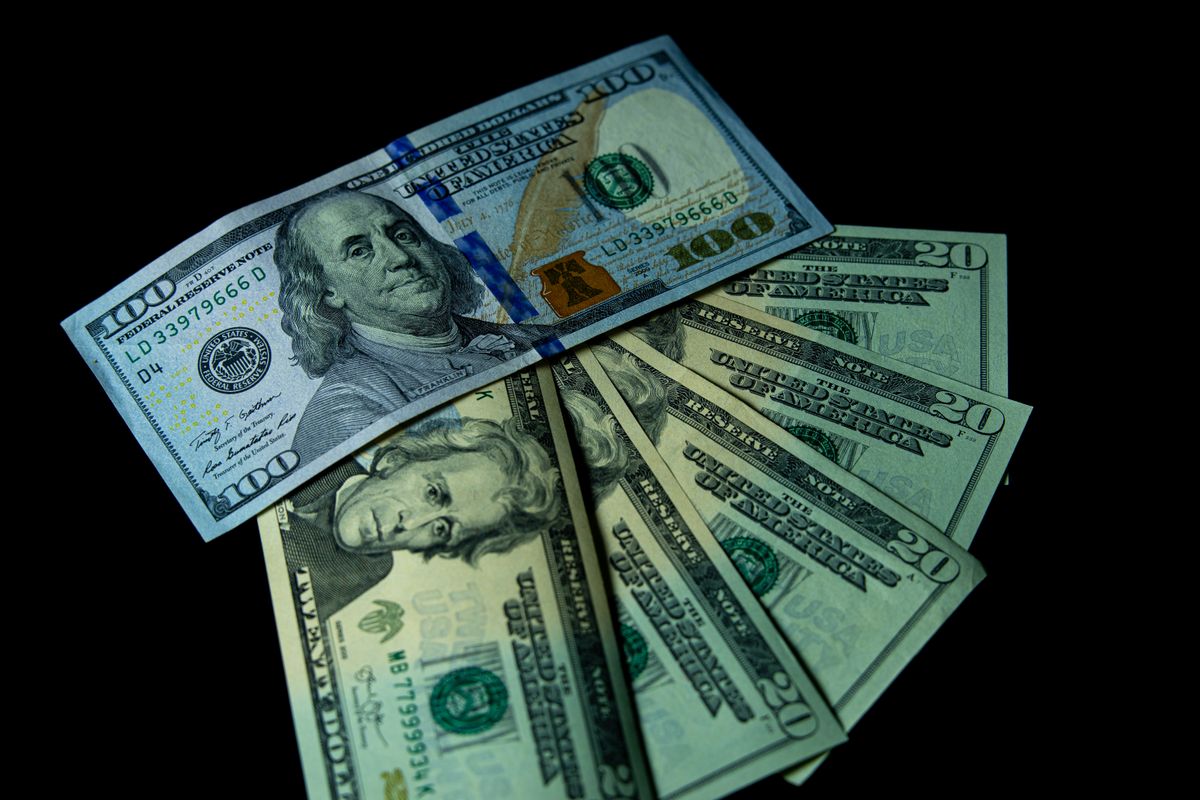
The rule change that rewrote dollar buying in Pakistan
The single most important fact about buying dollars in 2026 is the State Bank's cash restriction. Under the revised framework, banks and exchange companies must transfer foreign currency directly into the buyer's account rather than handing over cash for deposit purposes. If you are buying dollars to put into a foreign currency (FCY) account, the exchange company no longer gives you notes — it issues a cheque or makes an account-to-account transfer into your FCY account. If your FCY account is in the same bank as the exchange company, the transfer is immediate. If it is in a different bank, clearing takes at least five working days for dollars, and 20 to 25 days for euros or pounds.
Cash has not vanished entirely. The restriction targets deposit-bound purchases; dollars bought for travel or another genuine personal purpose can still be sold as cash, but the paperwork threshold is low. Nobody can buy more than $500 without giving a reason, and above $500 you must complete biometric verification and provide supporting documents. Travellers, students going abroad, and pilgrims heading for Hajj or Umrah must furnish full documentation for larger amounts. Even a $500 cash purchase now requires a stated purpose. The exchange company records it, and the record is the point: the system is designed so that every dollar sold has a name, a purpose and a trail attached to it.
Why did the State Bank do this? The official logic is a cashless economy and tighter oversight of currency flows, plus a deliberate push toward bank-owned exchange outlets, which the central bank has been encouraging commercial banks to expand. The practical effect for you is simpler: the licensed counter is now the only counter that matters, and the unlicensed one is not a bargain — it is a risk.
How to buy US dollars in Pakistan: the three legal routes
There are exactly three places a resident Pakistani can legally buy dollars. Everything else is either a variation of one of these or something to avoid.
**1. A licensed exchange company.** This is the route most people use. Pakistan's exchange companies operate under the State Bank's regulatory framework, which caps sales at $10,000 per person per day and $100,000 per person per calendar year across all companies, in cash or outward remittance combined. The company must obtain an undertaking from you at each transaction that you have not already hit those limits. Walk in with your original CNIC, state your purpose, complete biometric verification if the amount requires it, and pay in rupees. For deposit-bound purchases you will receive a cheque or transfer, not cash. For travel, you will receive cash against your ticket, visa or admission documents. Compare the day's rate across two or three companies before you commit — the spread between counters on the same street can be Rs 1 to Rs 3 per dollar, which is Rs 1,000 to Rs 3,000 on $1,000.
**2. Your bank's foreign exchange counter.** Commercial banks sell foreign currency too, and since the State Bank has been pushing banks into the exchange business, bank counters are often the smoothest option — especially if you already hold an FCY account there, because the transfer is instant instead of a five-day cheque clearing. Banks tend to quote slightly wider spreads than street exchange companies but offer stronger receipts, cleaner paper trails and, crucially, an account the dollars can land in. If you are buying more than a few thousand dollars, start with your own bank: ask for its buying rate, its charges, and whether it will issue the dollars against your account the same day.
**3. Through your own FCY account, funded from abroad.** This is not buying in the street sense, but it is how many Pakistanis legitimately hold dollars: remittances from family abroad, or a transfer from another of your own accounts, landing directly in a foreign currency account. The State Bank treats these accounts as free from foreign exchange restrictions — you can withdraw dollar notes, convert to rupees at the bank's rate, or send the money abroad up to your balance. If you regularly receive money from abroad, this route avoids the exchange counter entirely. Our guide to the [cheapest ways to send money to Pakistan in 2026](https://frinjo.me/blog/cheapest-ways-to-send-money-to-pakistan-in-2026) compares the remittance routes that feed these accounts, and the [best bank account for freelancers in Pakistan in 2026](https://frinjo.me/blog/best-bank-account-for-freelancers-in-pakistan-2026) explains which receiving route loses the least between a client's payment and your pocket.
The limits: daily, yearly, and travel — in one table
Limits are where most confusion lives, because three different caps apply at once. Here they are, side by side, as they stand under the State Bank's framework for exchange companies and the customs rules for carrying currency out of the country.
**Exchange company sales:** $10,000 per person per day, and $100,000 per person per calendar year, across all companies combined. These caps cover cash and outward remittance together, and every company must check your undertaking that you are inside them.
**Cash without extra paperwork:** $500. Above that, purpose, documents and biometric verification are mandatory. This is the threshold that catches most first-time buyers by surprise — a $600 purchase for a relative's university fee is not a big transaction, but it is a documented one.
**Carrying currency abroad:** $5,000 per trip for adults (18 and over), and $30,000 per year in total. Under-18s are capped at $2,500 per trip and $15,000 per year. The currency must have been bought through a licensed company, you must keep the original exchange receipt for customs, and you cannot export Pakistani rupees at all. Travellers can now pre-declare currency on the official Pass Track app, which cuts 15 to 20 minutes of airport formalities.
Note what the travel cap means in practice: a family of four adults travelling together cannot pool their $5,000 allowances into one person's bag to carry $20,000. Each traveller's limit is personal, and customs counts per person. Families that need to move larger sums legally do it through bank transfers, not suitcases.
The worked cost: what $1,000 actually costs you
The exchange rate on the board is never the whole price. Here is $1,000 bought at a licensed exchange company in 2026, with every layer of cost made visible. Assume the interbank rate on the day is Rs 280 per dollar.
**The spread.** The exchange company sells at, say, Rs 282 — Rs 2 above interbank. That is Rs 2,000 on $1,000, and it is the main cost. Street companies and banks differ by Rs 1 to Rs 3 per dollar, so shopping around is worth Rs 1,000 to Rs 3,000 on this one transaction. Always ask for the selling rate, not the buying rate — the board shows both, and the one that matters to you is the higher one.
**The tax layer.** If the dollars are going into an FCY savings account rather than being spent on travel, remember that bank profit on foreign currency accounts is taxed under Section 151 of the Income Tax Ordinance at 20% for filers and 40% for non-filers — the same treatment as a rupee account. That is not a purchase cost, but it is a holding cost that decides whether an FCY savings account beats a rupee account. On the purchase itself, the withholding treatment depends on your filer status and the transaction type, which is one more reason to check your filer status before you buy rather than after. Our [FBR tax filing guide for freelancers](https://frinjo.me/blog/fbr-tax-filing-for-freelancers-in-pakistan-2026-guide) explains the filer versus non-filer gap in detail, and the same logic applies here: non-filer rates are roughly double, everywhere, every time.
**The delay cost.** If your FCY account is in a different bank from the exchange company, your dollars arrive as a cheque that takes at least five working days to clear — longer for euros and pounds. During those five days the rate can move against you, and you cannot use the money. Buying through a bank-owned exchange counter where you already hold the FCY account eliminates this delay entirely, which on a volatile week can be worth more than the spread difference.
**The total.** On $1,000 at Rs 282: Rs 282,000 out of your pocket, Rs 2,000 of it spread, plus your time and transport. If you are a filer buying for travel, that is essentially the whole story. If you are a non-filer buying for deposit, add the future 40% tax on any profit the account earns, and the five-day clearing wait if your account is elsewhere. The honest comparison is never rate versus rate — it is total rupees out versus dollars usable, on the day you need them.
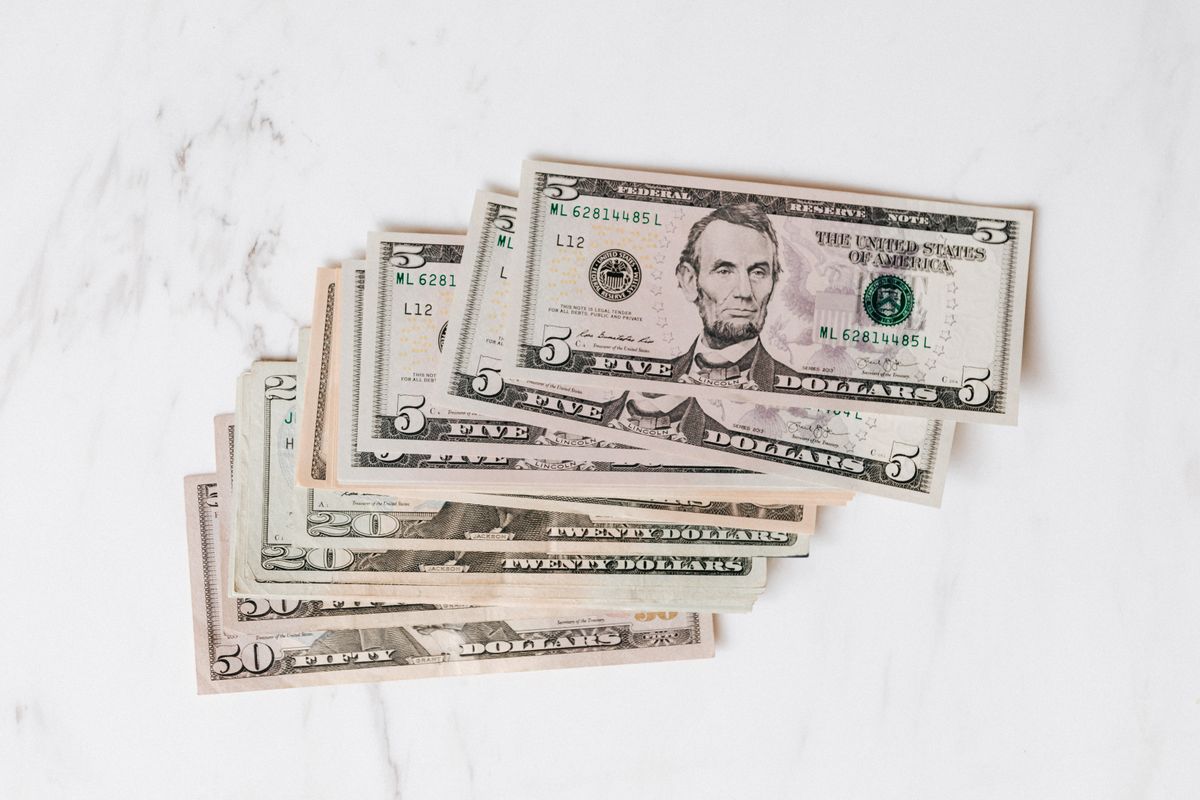
The FCY account route, step by step
For anyone buying dollars more than once a year, the foreign currency account is the upgrade that makes every future purchase simpler. Here is the process.
**Step 1: Pick your bank.** Use the bank where you already hold a rupee account if it offers FCY accounts — your identity checks are already done, and same-bank transfers are instant. Ask for the bank's key fact statement before you open anything: it lists the minimum balance, the debit card fee, and the profit rate in writing.
**Step 2: Choose current or savings.** A current account suits money you will spend soon — travel, fees, imports. A savings account pays a small profit but that profit is taxed at 20% for filers and 40% for non-filers. For most buyers, current is the right default; open savings only if the balance will sit for months.
**Step 3: Go to the branch with your original CNIC.** Fill in the account opening form and the source-of-funds declaration — where the money comes from, for example remittances from a son in Saudi Arabia or your own freelance income. Some banks ask for a minimum first deposit; MCB, for example, asks for $500. Bring proof of filer status if you plan to deposit cash dollars, because it changes the tax treatment on the spot.
**Step 4: Fund it.** Either deposit cash dollars (subject to the $500 documentation rule and the account-to-account transfer requirement), receive a transfer from an exchange company, or receive a remittance from abroad. Once funded, the account is free from foreign exchange restrictions: withdraw dollar notes, convert to rupees at the bank's buying rate, or send abroad up to your balance.
**Step 5: Get the dollar debit card if you travel.** Ask for its yearly fee in the key fact statement before you accept it. A dollar card that charges $25 a year is a bad deal if you travel once; it is a bargain if it saves you three exchange-counter visits.
One warning that belongs in every guide like this: never let anyone else's name sit on your FCY account, and never buy dollars into someone else's account because yours "wasn't ready." The paper trail is the whole point of the legal route, and a broken trail helps nobody — not you, not the other person, and not the bank officer who has to explain it later.
Four mistakes that get ordinary Pakistanis in trouble
**1. The unlicensed changer with the better rate.** A street dealer offering Rs 1 below the licensed rate on $5,000 saves you Rs 5,000 and costs you everything else: no receipt, no proof of source, no legal standing if the notes are counterfeit, and no way to explain the dollars at customs or to your bank. Licensed counters exist precisely so that your purchase is defensible. The Rs 5,000 saving is the most expensive discount in this guide.
**2. Buying for someone else.** Exchange companies sell to the person standing at the counter, against that person's CNIC and undertaking. Buying dollars for a friend, an employee or a relative — even with their money and their permission — puts your name on a transaction that is not yours. If that person later faces a question about the funds, the trail leads to you. Everyone buys their own.
**3. Losing the receipt.** The exchange receipt is the only document that proves your dollars were bought legally. Customs asks for it when you carry currency abroad. Your bank asks for it when you deposit. Keep the original, photograph it the same day, and keep both until the dollars are spent and the trip is over. A purchase without a receipt is, for practical purposes, a purchase you cannot prove.
**4. Confusing the limits.** The $10,000 daily cap, the $100,000 yearly cap and the $5,000 travel cap are three different rules enforced by three different checkpoints — the exchange company, the State Bank's reporting, and customs. Hitting none of them individually does not help if you breach one of them: buying $8,000 legally from a company and then trying to carry $8,000 abroad breaks the travel cap even though the purchase was legal. Check the rule that applies to the step you are actually taking, not the one you already passed.
Your checklist before you walk into the exchange company
Carry these, in this order, and the counter visit takes ten minutes instead of an hour.
**Original CNIC** — not a photocopy, not a photo on your phone. The biometric verification runs against the original.
**Proof of purpose** — air ticket, visa, university admission letter, or fee invoice, matching the amount you want. For travel, the ticket and visa decide how much you can buy as cash.
**Filer status proof** — your Active Taxpayer List status, printed or on your phone. It changes tax treatment on deposits and on account profit, and some counters ask for it upfront.
**Your FCY account details** — if the purchase is for deposit, the account number and bank branch, so the transfer or cheque is issued correctly. Same-bank purchases clear immediately; cross-bank cheques take five-plus working days, so plan around that.
**A second rate quote** — one competing counter's selling rate, checked the same morning. Rates move during the day, and a quote from yesterday is not a quote.
And one final habit: after every purchase, check the receipt before you leave the counter — amount in dollars, rate applied, your name and CNIC number spelled correctly. Errors found at the counter take two minutes to fix. Errors found at the airport take your flight.
The verdict: buy legal, buy documented, buy once
The cheapest way to buy US dollars in Pakistan in 2026 is not the cheapest rate on the street. It is the licensed counter, with your CNIC, your purpose stated, your receipt kept, and — if you buy more than once a year — your own FCY account waiting to receive the transfer. The spread costs you Rs 2,000 on $1,000. The unlicensed shortcut costs you the receipt, the paper trail and, sooner or later, a question you cannot answer.
If you are buying for travel, the licensed exchange company with your ticket and visa in hand is the whole process. If you are buying to hold dollars, open the FCY account first and buy through it — the instant same-bank transfer alone is worth the branch visit. And if the dollars are part of a bigger money plan — receiving income from abroad, saving in foreign currency, or moving money for family overseas — read the [cheapest ways to send money to Pakistan](https://frinjo.me/blog/cheapest-ways-to-send-money-to-pakistan-in-2026) and the [best digital wallets in Pakistan](https://frinjo.me/blog/best-digital-wallets-in-pakistan-2026-jazzcash-vs-easypaisa-nayapay) before you decide where the money lives, because the account you choose decides what every future transaction costs. Park idle rupees in one of the [best savings accounts in Pakistan in 2026](https://frinjo.me/blog/best-savings-accounts-in-pakistan-2026) while you plan, and let the dollars wait in the account that was built to hold them.
*Need a website that brings customers instead of just existing? [See our website pricing](https://frinjo.me/pricing) or talk to us about a [business website](https://frinjo.me/services/business-website) built around one offer and a speed target in writing.*
Need a website?
Let's build yours — in days, not months.
Our services
What WebStore Pro builds for businesses like yours
- Full Stack Web Development →
Complete websites and web applications built end to end — frontend, backend, database and admin panel — fast, secure and ready to grow.
- Business Website →
Professional company website with services, portfolio, contact forms and everything your brand needs online.
- Admin Panel →
Easy dashboard to add products, update prices and track orders yourself — no coding knowledge required.
- Payment Integration →
Stripe, PayPal, JazzCash and more — accept online payments securely with your own merchant account.
- WhatsApp Ordering →
Let customers order directly through WhatsApp with one tap — perfect for small businesses and local shops.
- SEO Basics →
Search-friendly structure, fast loading and proper meta tags so customers can actually find you on Google.